Plan your visit to Cologne Zoo
Cologne Zoo is a large city zoo best known for its Elephant Park, immersive Hippodom, and the fact that the aquarium is included in the same ticket. It’s easy to underestimate how much time the indoor houses add, especially if you’re visiting with children or planning around feedings. A good visit here is less about rushing from one animal to the next and more about timing the big habitats well. This guide covers the route, tickets, timings, and practical details you’ll actually use.
Quick overview: Cologne Zoo at a glance
If you want the short version before you book, these are the details that most affect how your day feels.
- When to visit: Monday–Sunday, typically 9am–6pm in summer and 9am–5pm in winter. Weekday mornings are noticeably calmer than sunny weekend late mornings, because many local visitors decide last-minute based on the weather.
- Getting in: From €22.50 online for standard entry. Combo tickets that add a 1-hour Rhine cruise are also available, and booking ahead matters most on school holidays, long weekends, and warm summer dates when gate lines and parking slow down.
- How long to allow: 3–4 hours suits most visitors. It stretches toward 5 hours if you add the aquarium properly, stop for feedings, or visit with young children.
- What most people miss: The aquarium deserves real time, not a quick end-of-day lap, and the Clemenshof farmyard plus playground are easy to miss if you only chase the headline habitats.
- Is a guide worth it? Usually no since this is one of the easier zoos to do self-guided, and the app plus feeding schedule add more value here than paying extra for structure.
🎟️ Tickets for Cologne Zoo sell steadily in advance during summer weekends, school holidays, and family travel periods. Lock in your visit before the date you want is gone.
Jump to what you need
🕒 Where and when to go
🗓️ How much time do you need?
🎟️ Which ticket is right for you?
🗺️ Getting around
🦁 Which animals to prioritize
♿ Facilities and accessibility
Where and when to go
How do you get to Cologne Zoo?
Cologne Zoo is in Riehl, north of the city center, beside Flora and about 10 minutes by tram from Cologne Cathedral.
Riehler Str. 173, 50735 Cologne, Germany
- Tram: Zoo/Flora stop (Line 18) → 2-minute walk → the most direct option from central Cologne and covered by the zoo’s transit-inclusive online tickets.
- Bus: Zoo/Flora stop → short walk → useful if you’re coming from nearby neighborhoods rather than Cologne Hauptbahnhof.
- Taxi/rideshare: Drop-off on Riehler Str. → 1–2-minute walk → simplest with strollers or if you’re arriving in bad weather.
- Driving/parking: On-site parking and a garage are available → around €5 per day → arrive early on sunny weekends because spaces fill fast.
Which entrance should you use?
Cologne Zoo is straightforward once you’re there: most visitors don’t get tripped up by multiple gates, they lose time by joining the ticket desk line instead of buying online first.
- Main entrance: Located on Riehler Str. 173. Expect 5–10 minutes on quieter weekdays and 15–30 minutes on sunny weekends and holiday mornings.
When is Cologne Zoo open?
- Monday–Sunday: 9am–6pm
- Monday–Sunday (winter season): 9am–5pm
- Last entry: About 30 minutes before closing
When is it busiest? Late morning to mid-afternoon on sunny weekends, public holidays, and school vacation dates is when the Elephant Park, Hippodom, and parking feel most congested.
When should you actually go? Aim for a weekday at opening time if you can, because you’ll get clearer views at the elephant habitat and indoor houses before family traffic builds.
How much time do you need?
| Visit type | Route | Duration | Walking distance | What you get |
|---|---|---|---|---|
Highlights only | Entrance → Elephant Park → Hippodom → Aquarium → exit | 3 hrs | ~2 km | You cover the big-name habitats and the aquarium, but you’ll skip slower family areas, some primates, and most of the secondary houses. |
Balanced visit | Entrance → Elephant Park → big cats → Hippodom → Jungle House → Aquarium → Clemenshof → exit | 4 hrs | ~3 km | This adds the strongest primate stops and a proper indoor break, which makes the visit feel rounded rather than rushed. |
Full exploration | Full zoo loop including elephants, big cats, primates, farmyard, playground break, aquarium, and feeding stops | 5–6 hrs | ~4.5 km | You see the zoo and aquarium without constantly checking the time, but families with young children usually need to pace this with lunch and rest stops. |
Which Cologne Zoo ticket is best for you
| Ticket type | What's included | Best for | Price range |
|---|---|---|---|
Cologne Zoo and Aquarium Entry Tickets | Entry to Cologne Zoo and Aquarium | A straightforward zoo day where you want full flexibility and don’t need a second attraction built into the same booking. | From €29.50 |
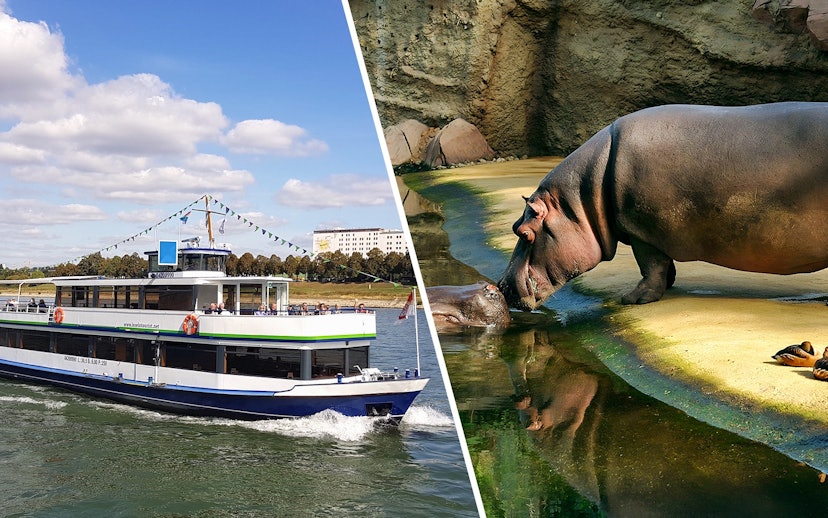
Combo: Cologne City Sightseeing Cruise + Cologne Zoo | Entry to Cologne Zoo and Aquarium + 1-hour panorama cruise + smartphone audio guide in English and German | A full Cologne day where you want the zoo first and an easy, low-effort city activity after without booking separately. | From €48.50 |
How do you get around Cologne Zoo?
Cologne Zoo is spread across a compact 20-hectare park with indoor houses folded into one main loop, so you can see the big-name habitats in 3 hours or stretch the visit much longer without feeling lost. Most people naturally drift toward the elephants first, which means the smartest crowd move is sometimes doing the aquarium or primates earlier and circling back.
Zoo layout and suggested route
- Entrance and Elephant Park: The zoo’s signature habitat and easiest early stop → plan for 30–40 minutes.
- Hippodom and Africa section: Hippos, crocodiles, and one of the best indoor viewing spaces in the zoo → plan for 20–30 minutes.
- Aquarium and terrarium: Fish tanks, reptiles, insects, and a solid all-weather break → plan for 30–45 minutes.
- Primate houses: Great apes, smaller primates, and some of the older but still worthwhile indoor houses → plan for 25–35 minutes.
- Clemenshof and playground: Farm animals, kid reset time, and a calmer corner of the zoo → plan for 20–30 minutes.
Suggested route: Start with whichever of Elephant Park or the aquarium matters more to you, then do Hippodom before lunch, because many families bunch into the indoor houses once the day gets warmer or wetter.
Maps and navigation tools
- Map: Printed map and app-based planning tools cover the zoo loop and feeding times → grab one at the entrance before you start moving.
- Signage: Wayfinding is good enough for a self-guided visit, but it’s still easy to miss the farmyard and double back if you don’t glance at the map once or twice.
- Audio guide/app: The app is most useful for feeding schedules and daily planning rather than deep interpretation.
- Large outdoor POIs only: You won’t need offline GPS here, but the map helps because indoor houses and secondary paths can make the park feel bigger than it first looks.
💡 Pro tip: Check feeding times before you choose your first turn. It’s the easiest way to decide whether Hippodom, the aquarium, or the elephant habitat should come first.
Which animals and habitats should you prioritise?

Elephant Park
Species: Asian elephants
This is the habitat most visitors come away remembering, and for good reason: the enclosure is huge, modern, and built around a social herd rather than a single viewing moment. It’s worth slowing down here long enough to watch behavior, not just snap one photo and move on. Most people miss the elevated viewing angles, which are often better than the first crowded rail near the front.
Where to find it: Just after entering the zoo, on the main loop near the front-right side of the park.
Hippodom
Habitat type: African river ecosystem
The Hippodom is one of Cologne Zoo’s smartest stops because it works on multiple levels like underwater hippo views, crocodile sightings, and higher walkways looking over the whole habitat. If you rush it, you’ll only see one angle and miss why it feels so immersive. Most visitors don’t realize the upper-level views are just as important as the glass viewing windows below.
Where to find it: On the main zoo loop, beyond the central animal sections and clearly signposted as one of the major indoor houses.
Aquarium and terrarium
Habitat type: Aquarium, reptile house, and insect exhibits
Because it’s included in the same ticket, this adds real value to the visit and is one of the best reasons to stay longer than 2 hours. The strong point here isn’t one single tank but the range, from tropical fish to reptiles and smaller species that children tend to love. Most people save it until the end and then rush through when they’re already tired.
Where to find it: On the zoo grounds as part of the same visit, in its own dedicated indoor building.
Jungle House and primate areas
Species: Great apes and smaller primates
If you like animal behavior more than headline-photo moments, this is where Cologne Zoo gets especially rewarding. You’ll often get longer viewing opportunities here than at the most famous habitats, and it’s a good section to revisit later in the day when activity shifts. Many visitors miss the older adjacent primate spaces because they assume the first ape stop is the only one worth seeing.
Where to find it: In the inner zoo loop, beyond the major flagship habitats and linked with the broader primate section.
Clemenshof and petting area
Habitat type: Heritage farmyard and child-friendly animal area
This is the section families love and adults often skip too quickly, even though it changes the rhythm of the day in a good way. It’s quieter, more hands-on, and works especially well if younger children need a break between the elephants and the aquarium. Most visitors miss it because they treat the zoo as a race between exotic animals only.
Where to find it: Toward the back of the zoo, near the playground and family-oriented facilities.
Facilities and accessibility
- 🚻 Restrooms: Restrooms are available across the zoo, including indoor areas, which makes it easier to plan a longer family visit without doubling back to the entrance.
- 🍽️ Restaurants and snack spots: The zoo has restaurants and kiosks on-site, but regular visitors often treat them as a convenience stop rather than the highlight of the day.
- 🛍️ Gift shop: There’s a zoo shop near the exit, and it’s the easiest place to pick up animal plush toys or a quick kid-friendly souvenir before you leave.
- 🪑 Seating and rest areas: Benches, shaded spots, and quiet rest areas are spread across the grounds, which helps on a full 4-hour visit.
- 🅿️ Parking: On-site parking and a parking garage are available, but spaces can fill quickly on warm weekends and school vacation dates.
- 🚼 Changing rooms: Changing facilities are available, which makes the zoo a more realistic full-day visit with babies or toddlers.
- ♿ Mobility: Most main paths are stroller and wheelchair-friendly, ramps and elevators support key indoor spaces, and wheelchair rental is available, though some older houses feel tighter than the newer exhibits.
- 👁️ Visual impairments: Guide dogs with a valid permit are welcome, but this remains a strongly visual attraction, so feeding times add useful context if you want more than static viewing.
- 🧠 Cognitive and sensory needs: Weekday mornings are the calmest window, while the playground, indoor feeding windows, and headline habitats can feel loud and crowded later in the day.
- 👨👩👧 Families and strollers: The main route is stroller-friendly, changing facilities are available, and the mix of outdoor paths plus indoor houses makes pacing easier with young children.
Cologne Zoo works very well for children because the visit naturally alternates between big animal moments, indoor breaks, play areas, and shorter walking sections.
- 🕐 Time: 3–4 hours is realistic with young children, and the best priorities are Elephant Park, Hippodom, the aquarium, and at least one playground stop.
- 🏠 Facilities: The combination of restrooms, changing areas, seating, food outlets, and playgrounds makes this easier than many city attractions with kids.
- 💡 Engagement: Use feeding times as anchors as children stay more focused when the day has 2 or 3 ‘watch this now’ moments instead of one long animal loop.
- 🎒 Logistics: Bring snacks, a stroller if needed, and one extra layer for indoor climate shifts between outdoor paths and the aquarium or animal houses.
- 📍 After your visit: The nearby Flora gardens or the Rhine cable car are both easy add-ons if the children still have energy left.
Rules and restrictions
What you need to know before you go
- Entry requirement: Dated online tickets are usually the cheapest option, and children 12 years and under must be accompanied by an adult.
- Bag policy: Small day bags are fine, but packing light makes indoor houses and feeding stops much easier to manage.
- Re-entry policy: Same-day re-entry is generally possible with your ticket or an exit stamp, so ask at the gate before stepping out for lunch or another nearby activity.
Not allowed
- 🚫 Animal feeding: Don’t feed the animals unless a staff-led feeding program specifically allows it.
- 🚫 Wheeled and flying items: Drones, balls, frisbees, balloons, bicycles, scooters, roller skates, inline skates, and skateboards are not allowed inside.
- 🐾 Pets: Pets are not allowed, but guide dogs with a valid permit are welcome.
- 🖐️ Behavior around habitats: Don’t tap on glass, climb barriers, or try to attract animals, because close viewing is already built into the exhibit design.
Photography
Personal photography is generally fine across the zoo grounds and aquarium, and it’s one of the easier attractions in Cologne to shoot casually. The main hard restriction is drones, which are not allowed, and the practical rule is to keep gear compact in crowded indoor houses so you don’t block glass viewing spots or narrow paths.
Good to know
- Feeding times: The Hippodom and baboon areas feel completely different during scheduled feeds, so check the zoo app instead of just hoping to catch activity.
- Aquarium access: The aquarium is included in the same ticket, and many visitors underestimate how much extra time it adds.
Practical tips
- Booking and arrival: Book online even if you’re only deciding the day before since online pricing is usually lower than the gate, and you can walk straight past the ticket desk queue on busy mornings.
- Pacing: Don’t do every indoor house back-to-back early on; save the aquarium or one major indoor habitat for the middle of the day when you want a weather break and a slower stretch.
- Crowd management: The best crowd hack here is not just ‘go early’ but avoiding sunny weekend late mornings, when locals arrive in a wave and the elephant, hippo, and aquarium viewing areas all clog at once.
- What to bring or leave behind: Bring a small picnic or at least snacks if you’re picky about food, because on-site dining is convenient but gets mixed reviews on value and variety.
- Food and drink: If you want to eat on-site, do it a little before or after the main lunch rush; if you’d rather keep the visit moving, snack first and save a proper meal for after the zoo.
- Families: Use the playground and Clemenshof as a reset point, not an afterthought as it’s the easiest way to keep younger children happy enough for the aquarium later.
- Planning around activity: Feeding times matter more than people expect here, especially at the Hippodom, so build 1 or 2 into your route instead of wandering randomly.
What else is worth visiting nearby?
Commonly paired
Cologne City Sightseeing Cruise
Distance: About 4 km, around 20 minutes by tram or a short taxi ride
Why people combine them: The zoo gives you a walking-heavy half day, and the 1-hour Rhine cruise is an easy second activity that lets you sit down and still keep sightseeing.
Commonly paired
Flora Botanical Garden
Distance: About 200 m, 2 minutes on foot
Why people combine them: It’s right next door, free to enter, and works well as a quiet wind-down after a busier zoo visit.
Also nearby
Cologne Cable Car
Distance: About 150 m, 2 minutes on foot
Worth knowing: This is the easiest scenic add-on if you want a short, memorable ride over the Rhine after the zoo.
Cologne Sculpture Park
Distance: About 500 m, a 7 minutes on foot
Worth knowing: It’s a calmer stop than another major attraction, and it works well if you want a quiet walk rather than more queues.
Eat, shop and stay near Cologne Zoo
- On-site: Cologne Zoo has restaurants and snack kiosks, but many repeat visitors treat them as a fallback rather than a destination meal because value and variety are mixed.
- Best strategy: If food matters to you, bring snacks or a simple picnic and use the on-site outlets for coffee, ice cream, or a quick lunch rather than building your day around them.
- With children: The family areas near Clemenshof and the playground are the easiest spots to pause for a snack without breaking the flow of the visit.
- Pro tip: Eat a little earlier than standard lunch time or wait until after the main noon rush as the lines feel much lighter, and you won’t lose your best animal-viewing window in the queue.
- Cologne Zoo shop: The main gift shop near the exit is the obvious stop for plush animals, children’s souvenirs, and quick last-minute gifts.
- Best buy: If you’re shopping with kids, buy at the end rather than early on because carrying a plush elephant for 4 hours gets old quickly.
Riehl is quiet, green, and practical for a zoo visit, but it’s not the most useful base for a first-time Cologne trip if you want to walk to nightlife, major restaurants, and the cathedral area. It suits travelers who prefer a calmer neighborhood and don’t mind using the tram.
- Price point: The area generally feels more residential and mid-range than central tourist districts, with fewer obvious stay-here splurges right by the zoo.
- Best for: Families who want a quieter night, repeat visitors to Cologne, or travelers planning a relaxed itinerary around the zoo, Flora, and the Rhine.
- Consider instead: Old Town or Deutz make better bases for most first-time stays because you’ll be closer to the cathedral, riverfront, restaurants, and broader city transport links.
Frequently asked questions about visiting Cologne Zoo
Most visits take 3–4 hours, though a slower family day with the aquarium, feeding stops, lunch, and playground time can easily stretch to 5 hours. If you only want to see the main habitats like the elephants, Hippodom, and the aquarium, you can still do a solid shorter route in about 3 hours.
No, you don’t have to book in advance, but it’s usually the smarter choice. Online tickets are commonly cheaper than buying at the gate, and they save time on busy mornings when families queue at the ticket desks before heading in.
Not usually in the classic theme-park sense, because the real bottleneck here is the ticket counter, not a long security process. Buying online is the practical version of skip-the-line at Cologne Zoo, especially on sunny weekends, school holidays, and other family-heavy dates.
Cologne Zoo day tickets are date-based rather than tightly timed, so you don’t need to plan around a narrow slot. If you want the calmest start, aim to arrive close to opening, because the Elephant Park and indoor houses feel much easier before late-morning crowds build.
Yes, a small bag or backpack is fine for a Cologne Zoo visit. It’s still worth packing light, because you’ll be moving between outdoor paths, indoor houses, and family stops for several hours, and bulky bags get annoying faster than most people expect.
Yes, casual personal photography is generally fine throughout the zoo and aquarium. The main hard restriction is drones, which are not allowed, and the practical rule is to keep your gear compact in crowded indoor spaces so you don’t block viewing windows.
Yes, Cologne Zoo works well for groups, and it’s a common stop for school parties, families, and organized outings. If you’re visiting independently, you can simply book regular entry tickets, but larger school or guided group arrangements usually need advance planning directly with the zoo.
Yes, it’s one of the easier family attractions in Cologne to recommend. The mix of big animals, indoor areas, playgrounds, restrooms, changing facilities, and stroller-friendly routes makes it work well with both toddlers and older children.
Yes, the zoo is generally wheelchair accessible, and it’s also easy to manage with strollers. Main paths are broad, ramps and elevators support important indoor areas, and wheelchair rental is available, though some older buildings can feel tighter than the newest habitats.
Yes, food is available on-site through restaurants and kiosks, so you won’t need to leave just to eat. That said, many repeat visitors bring snacks or a simple picnic because on-site dining is more convenient than memorable, especially if you’re watching your budget.
Yes, the aquarium is included in the standard Cologne Zoo ticket. That’s one of the biggest value points here, and it’s also why many visitors end up staying longer than planned once they realize the aquarium, reptile, and indoor exhibits are part of the same day.
Yes, Cologne Zoo still works in winter, especially if you like quieter visits. You’ll have fewer crowds and easier pacing, but shorter opening hours and colder weather mean you should lean more on indoor houses like the aquarium and Hippodom rather than expecting every outdoor habitat to feel equally active.